RPM-One Mobile Application Design
Role
Principal UI/UX Designer, Content Strategist
Client
RPM-One
Tools
Figma

The Problem
RPM-One was envisioned as a remote physiologic monitoring platform to help patients with chronic obstructive pulmonary disease (COPD) manage their condition from home, while giving clinicians the real-time data they need to intervene early. The creators of RPM-One needed to communicate a complex, two-sided application to potential investors.
The team needed high-fidelity wireframes for both sides of the product — one tailored to the COPD patient navigating their own care, and one for the clinician using an AI-powered triage assistant to review patient data and deliver care recommendations. These wireframes had to be polished enough to stand in for the product itself, making the vision tangible and investable before development could begin. Lastly, we had a tight turnaround time of 4 weeks to accomplish this.
No product existed
RPM-One was a vision — no screens, no code, nothing built. The founders needed a way to make it real enough to show investors.
Two users, two worlds
A COPD patient managing care at home, and a clinician triaging remotely — each needing a completely different interface and experience.
4 weeks to deliver
Both wireframe sets — patient and clinician — had to be investor-ready in a month. High fidelity, high stakes, tight window.
The Solution
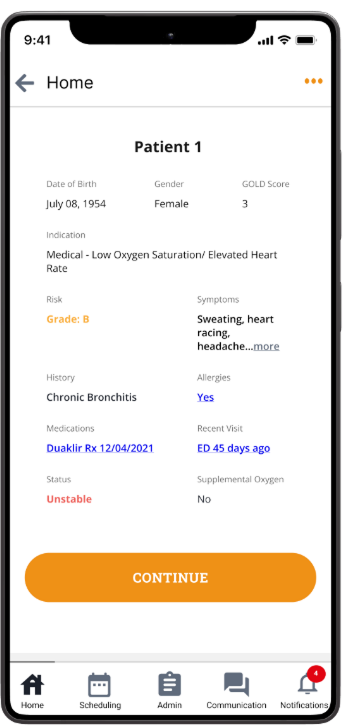
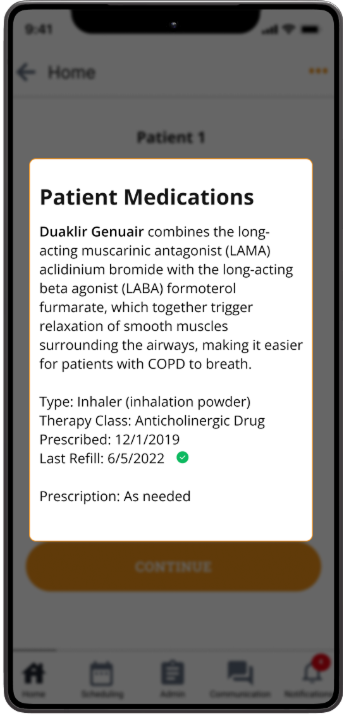
Two sets of high-fidelity wireframes or “prototypes”— one for the patient, one for the clinician, each built around its user's distinct context, needs, and goals.
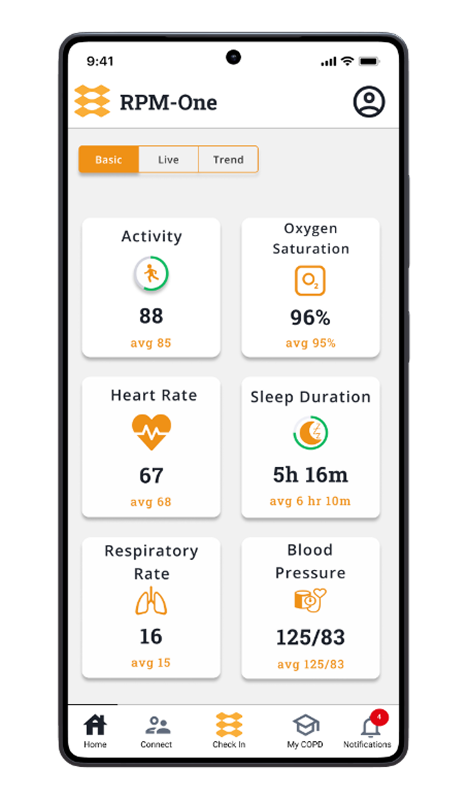
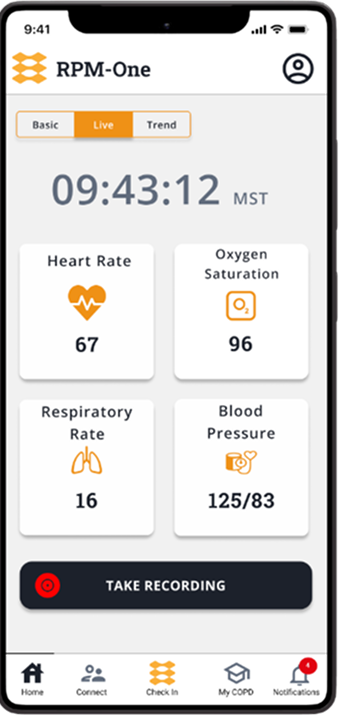
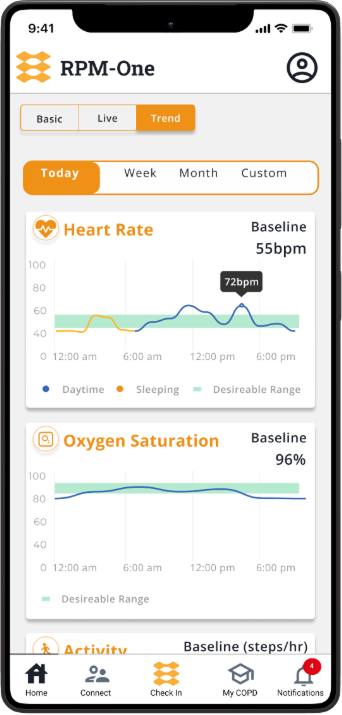
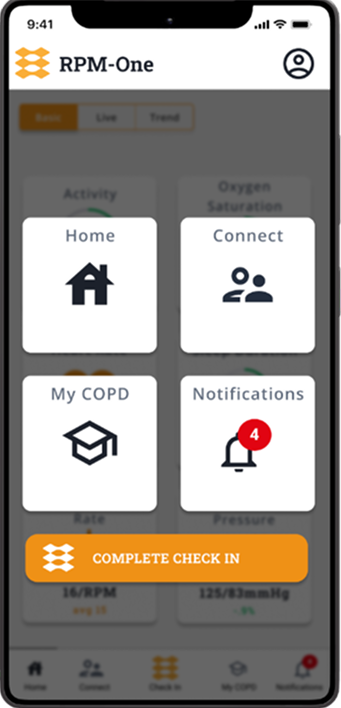
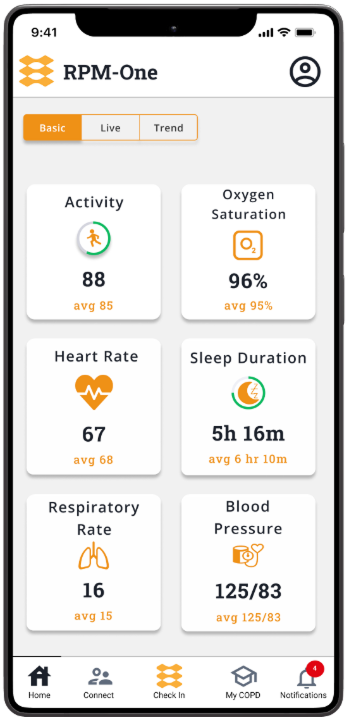
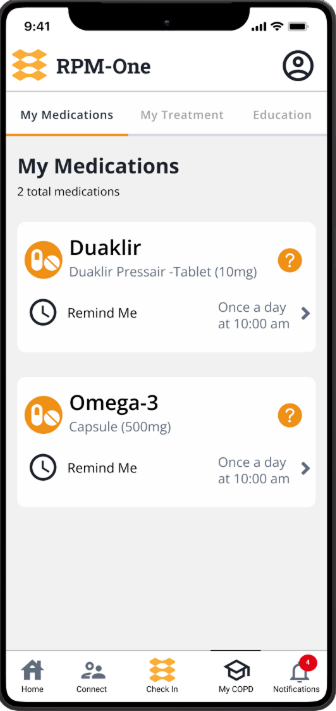
For the Patient: A prototype that allows users to view and monitor their vitals as well as set appointments, view medication information, and complete daily symptom check-ins. The patients vitals are captured by a wristband.
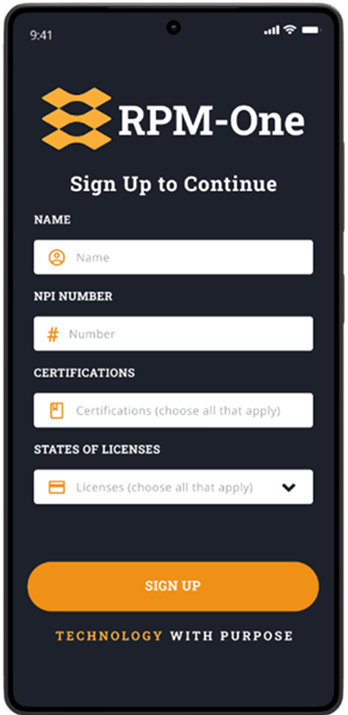
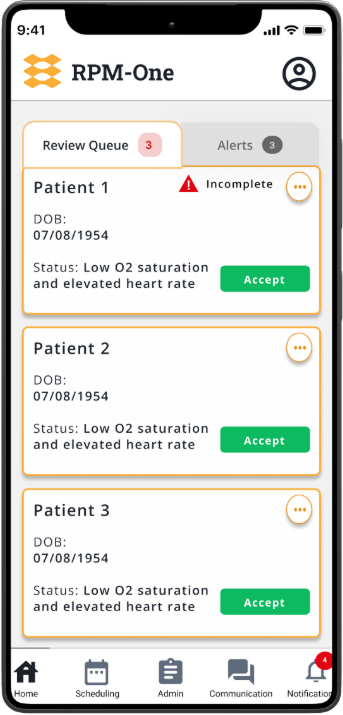
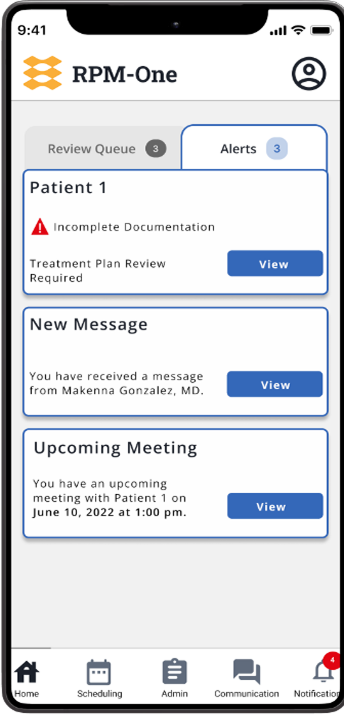
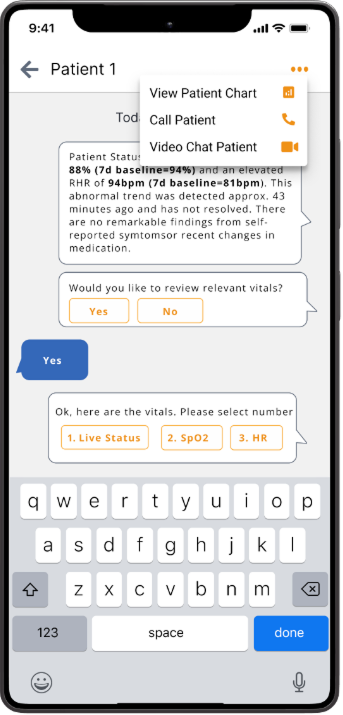
For the Clinician: A prototype that allows users to view patients in a queue and provide care recommendations based on patient vital and health information that is transmitted via the mobile app.
Design Process
Collaborated across the full team to define requirements, map both user journeys, and align on the product vision before a single screen was designed.
With a clear plan in hand, we jumped straight into design. Used agile methodology to iterate rapidly on both interfaces, incorporating founder feedback after each round.
My Impact
As a the principal UX/UI Designer, I delivered two complete sets of high-fidelity wireframes. I was able to translate the founders' vision into a fully realized, investor-ready product. Working in close collaboration with the founding team, I took an abstract concept and gave it form, structure, and clarity across two distinct user experiences in under four weeks. The wireframes played a direct role in the investment pitch, giving stakeholders a tangible, credible representation of the product and helping the founders secure the funding they would need to move RPM-One from idea to development.
Managing COPD from home
A mobile experience that puts health visibility and daily care routines in the patient's hands — simply and confidently.
AI-assisted triage at scale
A clinical dashboard that surfaces the right patient, at the right moment, with the data needed to act — powered by an AI triage assistant.
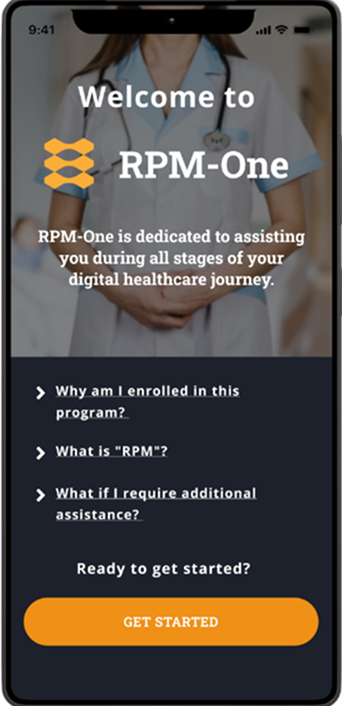
COPD End-Patient Wireframes
Clinician Wireframes
In Conclusion
This project has turned out to be one of my favorites. From the fast pace to the joy of full creative control—this project enabled me to see application design in a brand-new light. I particularly enjoyed discovery sessions with the founders, walking them through how to structure the different user experiences, and bringing their ideas to the screen for the first time. We ended with a viable MVP that the founders successfully deployed during their investment pitch.
Explore other projects
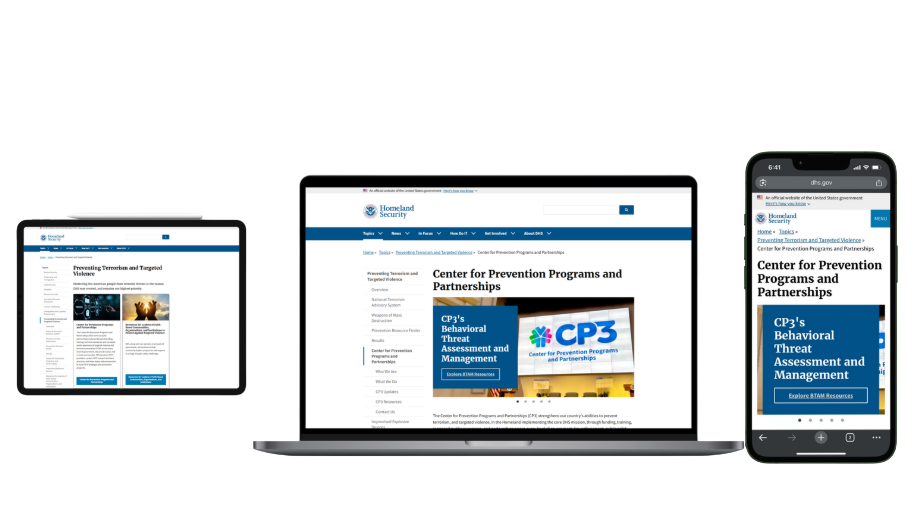
CP3/DHS Website Redesign
U.S. Department of Homeland Security · DHS
Served as lead UX/UI designer on CP3 website modernization effort.
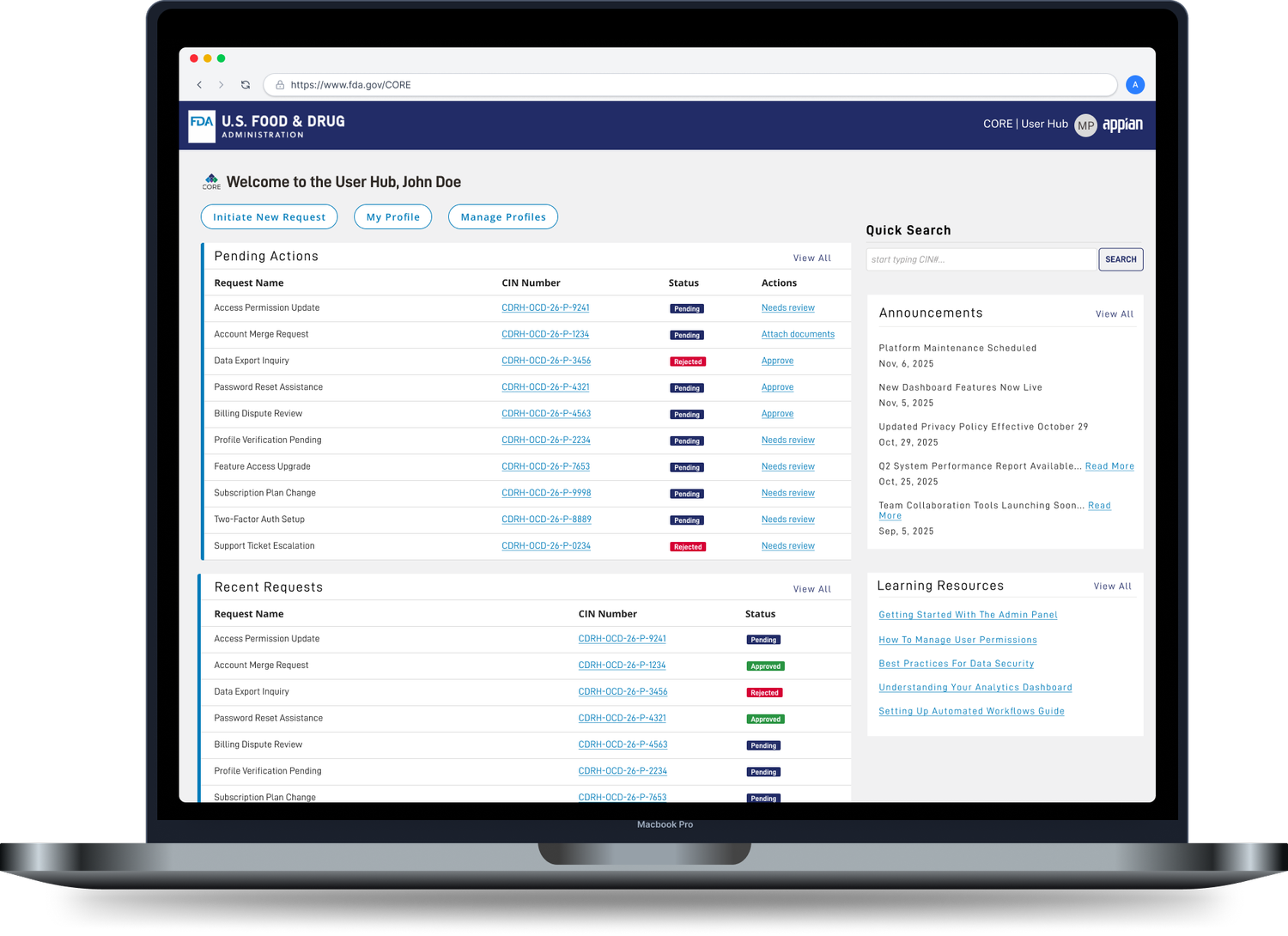
FDA Systems Modernization
U.S. Food & Drug Administration · FDA
Served as lead UX/UI designer on FDA CORE platform design.